
Lexington School District Two launched a program this fall that gives all students an opportunity to receive high school foreign language credit by completing an exam.
The new program approved by the SC Department of Education uses the STAMP4S assessment, an online exam that measures language proficiency in reading, writing, listening, and speaking skills.
The exam is offered in Spanish, German, French, and Latin, and includes four sections: multiple choice, listening, reading, and an extended response. Students can retake the exam as many times as they wish. However, it is only recommended that it be completed up to two times, as one exam may not demonstrate enough mastery to test out of certain levels.
Denise Quickel, the district’s Director of Bilingual Services and ML (multilingual learners) Education, said the program provides professional development to schools and supports family and home relationships.
“If you already learned the language, why would you have to sit there and re-learn it if you’ve already developed mastery?”
The district has been using this assessment for second language students in the 11th and 12th grades to earn the SC Seal of Language Proficiency. However, this past year, Dr. David McDonald, the district’s chief academic and innovation officer, developed a plan to expand access so that any student — whether they speak a different language at home or have already expressed proficiency in certain levels — can attempt to earn a foreign language credit.
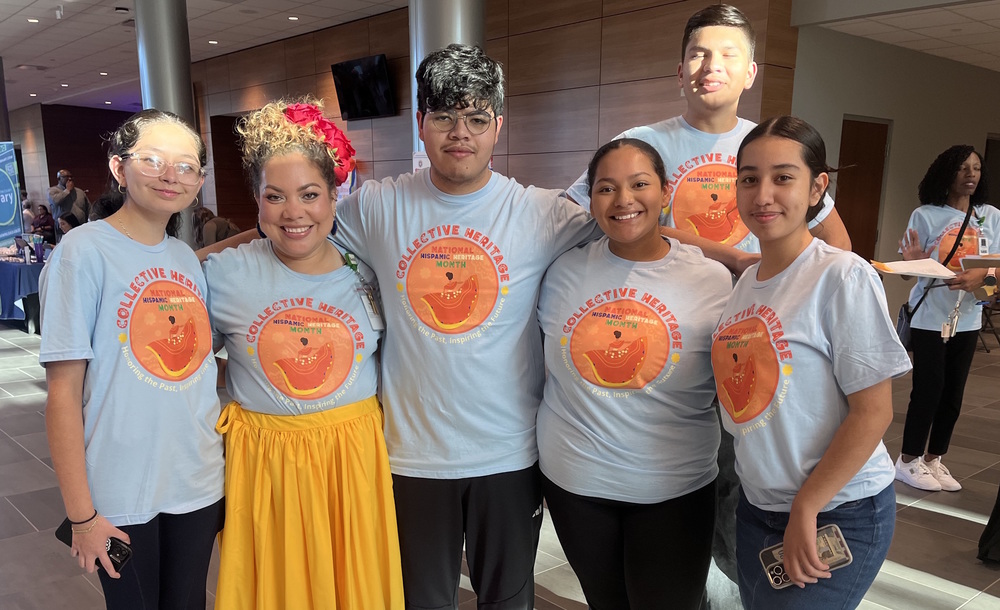
Ninth-grader Frida Barrientos Reyes earned all four credits of Spanish at Brookland-Cayce High School this year. In her role as a multilingual learner ambassador, she helps students who are new to the district and are currently learning English.
“I did not find the exam too challenging. I understood all the sections,” Reyes said. “However, the speaking part was slightly difficult since the lady was talking very fast, although I still understood it all.”
Spanish is her first language, so she plans to take French in the future since she now can explore other languages. The program allows students to test out of basic level classes and take advanced language courses sooner and possibly enroll in another language based on their knowledge.
Quickel said the program can be particularly beneficial to foreign born students who may opt to take an exam in their original language because it gives them the opportunity to use their first language to their advantage.
“It’s purposeful work,” she said. “We’re building a bridge between the district and our second language families.”
If a language teacher sees that a student is doing exceptional work in a beginner level class, they can nominate students to take the exam to test out of additional levels. Nominated students are notified through a letter or email sent home to their families explaining the exam and including study materials such as practice tests.
However, the exam is not limited to only students who have been nominated. Anybody who thinks they can test out of one or more levels of a language is able to participate in this program.
Based on composite scores, students can test out of one to four levels of language. For instance, a student may test out of the beginner courses of Spanish 1 and 2. They would then be able to enroll in the advanced courses of Spanish 3 and 4 and may even have time to explore another language before graduating.
This evaluation also shows students which areas of language they need extra practice in. For example, if a student excels in the multiple choice, listening, and reading sections of the exam, but does not do as well in the writing, they know what classes to take to further this knowledge.
While it is too early to know the full impact of this program, it was started with the belief that students will take advantage of the exam and use their proficiency in one language to explore new languages. If more students enroll in higher level language courses, the district may explore opening additional classes and hiring more teachers.
Submitted by Adriana Craig. She is a sophomore at the University of South Carolina’s Honors College, where she is pursuing a bachelor of science degree in psychology. Beyond the classroom, she is a part of Pi Beta Phi SC Alpha Chapter, Student Government, and Psi Chi. She plans to get her masters in mental health counseling.